
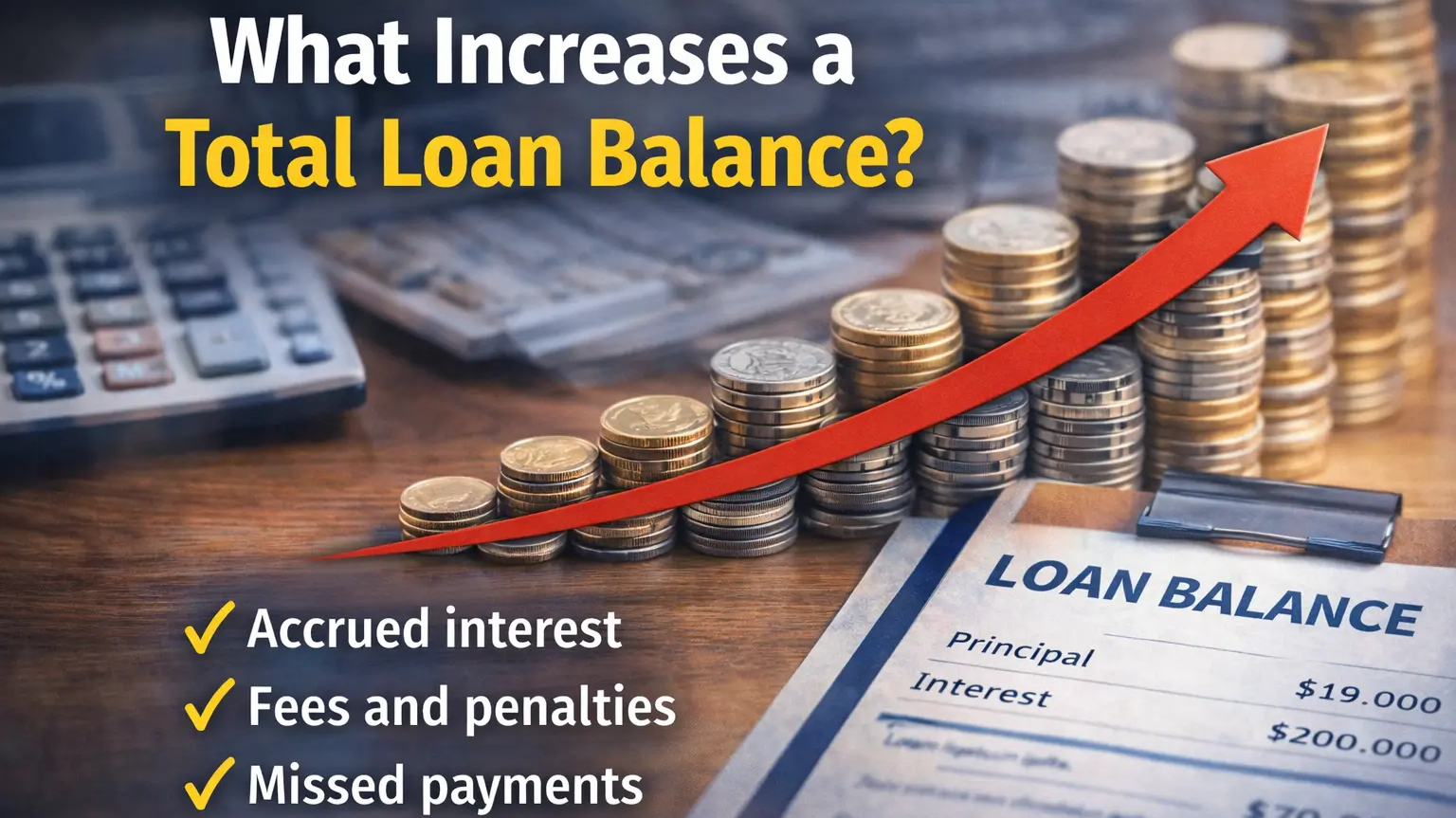
A loan balance is often expected to decline steadily as monthly payments are made. In practice, many borrowers notice that the amount owed does not fall as quickly as anticipated, or in some cases increases over time. Understanding What Increases a Total Loan Balance requires examining how interest, fees, payment timing, and loan terms interact throughout the life of a loan. This explanation focuses on U.S. lending practices and applies across common consumer and business loan types.
What a Loan Balance Represents
A loan balance represents the amount currently owed to a lender. It is not limited to the original amount borrowed.
The principal balance is the original loan amount minus any principal that has been repaid. The total loan balance, sometimes called the outstanding balance, includes the principal plus any accrued interest, fees, or charges that have been added but not yet paid.
Because interest accrues over time and certain fees can be added to the account, the total balance may differ significantly from the principal balance. Loan statements often show both figures separately, which helps explain why the balance may change even when regular payments are made.
Interest Accrual Over Time
Interest is one of the primary factors that increases a loan balance. Most loans accrue interest daily based on the outstanding principal balance.
For long-term loans, such as mortgages or extended student loans, interest accumulates continuously between payments. If the interest accrued during a billing cycle exceeds the portion of the payment allocated to interest, the remaining amount reduces the principal. When payments are smaller or interest rates are higher, a larger share of each payment goes toward interest.
Over time, especially in the early stages of a loan, interest can slow the reduction of the principal balance. In some loan structures, unpaid interest may be added to the balance, increasing the total loan amount owed.
Missed or Late Payments
Missed or late payments can significantly affect loan balances. When a payment is not made on time, interest continues to accrue on the unpaid balance.
In addition, many loan agreements include late payment fees. These fees are added to the account and become part of the total balance. If they are not paid promptly, interest may also accrue on those fees, depending on the loan terms.
Repeated late payments can cause the balance to grow faster than expected, even if payments resume later. Loan servicing practices typically apply payments first to fees and interest before reducing principal, which can further delay balance reduction.
Fees That Increase a Loan Balance
Loan fees are another common contributor to balance growth. These charges may be assessed at different stages of the loan.
Origination fees are often charged at the beginning of a loan. While sometimes paid upfront, they may also be added to the loan balance, increasing the amount that accrues interest from the start.
Late fees are charged when payments are not received by the due date. If unpaid, they increase the outstanding balance.
Capitalized fees occur when certain charges are added to the principal balance rather than being billed separately. Once capitalized, these fees begin accruing interest like the rest of the principal, contributing to long-term debt balance growth.
Negative Amortization
Negative amortization occurs when scheduled payments are not sufficient to cover the interest accrued during the payment period. In this situation, unpaid interest is added to the loan balance.
This structure can appear in certain adjustable-rate loans, income-based student loan plans, or loans with introductory payment periods. Even though monthly payments are made, the total balance increases because interest continues to accumulate faster than it is paid down.
Negative amortization explains why some borrowers ask why does my loan balance keep increasing despite making payments. The increase is driven by unpaid interest being added to the balance.
Deferred Payments and Forbearance
Deferred payment periods and forbearance temporarily suspend required payments. While payments are paused, interest often continues to accrue.
Depending on the loan terms, accrued interest during deferment or forbearance may be capitalized at the end of the period. When this happens, the interest is added to the principal balance, increasing the total amount owed.
This process can result in a higher balance once regular loan repayment resumes, even though no new funds were borrowed.
Loan Refinancing and Balance Changes
Refinancing replaces an existing loan with a new one. The new loan balance typically includes the remaining principal of the original loan, plus any unpaid interest or fees rolled into the refinance.
In some cases, refinancing costs are added to the new loan balance instead of being paid upfront. This can cause the balance to increase compared to the remaining balance of the original loan.
While refinancing may change interest rates or loan terms, it can also reset amortization schedules, affecting how quickly the balance declines over time.
How Different Loan Types Are Affected
Car Loans
Car loans usually have fixed interest rates and set repayment schedules. Interest accrues daily, and late payment fees can increase the balance.
Negative amortization is uncommon, but balances can increase temporarily if payments are missed or fees are added. Refinancing an auto loan may also roll remaining charges into a new balance.
Personal Loans
Personal loans often have higher interest rates than secured loans. Interest accrual and fees can have a noticeable impact on the total balance.
Because these loans typically lack collateral, late fees and penalty interest rates may apply, contributing to faster balance growth if payments are delayed.
Student Loans
Student loans frequently involve deferment, forbearance, and income-based repayment options. Interest capitalization is a key factor in student loan balance growth.
During deferment periods, unpaid interest may be added to the principal. This can cause balances to rise significantly over time, even without missed payments.
Business Loans
Business loans vary widely in structure. Some include variable interest rates, balloon payments, or flexible repayment schedules.
Fees, interest capitalization, and refinancing are common contributors to balance changes. Loan servicing terms play a major role in how payments are allocated between interest and principal.
How Loan Balance Growth Affects Credit
Loan balance growth can influence credit profiles in several ways. Credit reports typically reflect the outstanding balance and payment history for each loan.
An increasing balance may affect credit utilization for certain types of accounts, particularly revolving or hybrid credit products. Payment history remains a critical factor; missed or late payments can have a stronger impact than balance size alone.
Lenders report balances regularly, so changes in the total loan amount are visible to credit bureaus. Understanding loan statements helps clarify how reported balances align with actual account activity.
How to Monitor a Loan Balance
Monitoring a loan balance involves reviewing periodic loan statements and online account information. Statements typically show the principal balance, accrued interest, fees, and payment allocation.
Online loan servicing platforms provide real-time balance updates and payment histories. Tracking these details helps explain why balances change from month to month.
Payment tracking also highlights how much of each payment goes toward interest versus principal, offering insight into the pace of loan repayment.
Key Takeaways
A loan balance can increase due to interest accrual, fees, missed payments, negative amortization, deferment, or refinancing. The total balance reflects more than just the original amount borrowed.
Understanding how interest, fees, and loan terms interact explains why balances may grow even when payments are made. Reviewing loan statements and servicing details provides clarity on debt balance growth across different loan types.