
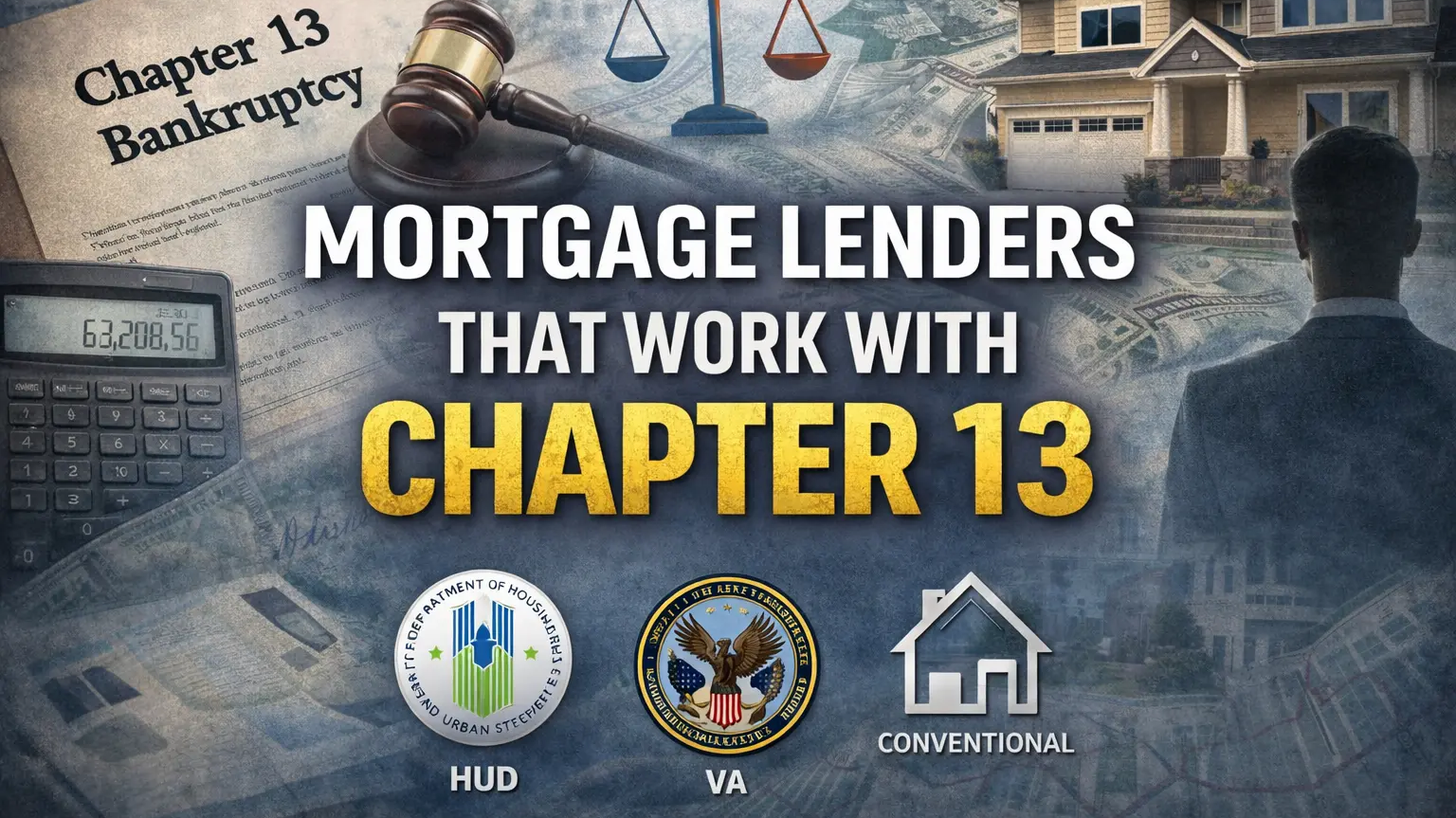
Mortgage lenders that work with Chapter 13 evaluate borrowers under specific bankruptcy-related guidelines. Chapter 13 bankruptcy mortgage lenders operate within federal lending standards, investor requirements, and court-imposed restrictions. Eligibility depends on whether the borrower is currently in an active repayment plan or has received a discharge.
Understanding how lenders assess mortgage approval during Chapter 13 requires examining repayment plan status, waiting periods, credit recovery, and underwriting standards.
Can You Get a Mortgage While in Chapter 13?
Chapter 13 bankruptcy is a court-supervised repayment plan that allows individuals to reorganize debts over three to five years. During this period, borrowers make structured payments to a bankruptcy trustee under court approval.
The question “can you get a mortgage while in Chapter 13” depends on repayment history, court authorization, and lender guidelines.
Legal Status of Chapter 13 Bankruptcy
While in active Chapter 13, the borrower remains under court protection and supervision. New debt obligations, including mortgages, require court approval. The bankruptcy case remains open until discharge or dismissal.
Active Repayment Plan Requirements
Most government-backed loan programs require at least 12 months of on-time payments under the Chapter 13 repayment plan before considering mortgage approval during Chapter 13. The payment record must show no late installments to the trustee.
Court Trustee Approval Requirement
Borrowers must obtain court approval for mortgage during Chapter 13. This involves filing a motion to incur new debt. The trustee reviews the request and determines whether the proposed mortgage payment fits within the repayment plan structure.
Lender Discretion
Even if court approval is granted, lenders retain discretion to approve or deny the loan based on borrower qualification criteria, credit score requirements after Chapter 13, and debt-to-income ratio after bankruptcy.
Applying during active Chapter 13 differs significantly from applying after discharge. After discharge, court supervision ends, and standard bankruptcy waiting period for mortgage guidelines apply.
Mortgage Options During Active Chapter 13 Bankruptcy
FHA Loans During Chapter 13
An FHA loan after Chapter 13 may be available during an active repayment plan if certain requirements are met.
Key conditions include:
- Minimum 12 months of verified, on-time Chapter 13 payments
- Court approval for mortgage during Chapter 13
- Demonstrated ability to manage housing payments
FHA guidelines allow mortgage approval during Chapter 13 when debt-to-income ratio after bankruptcy falls within program limits. Standard FHA debt-to-income thresholds generally range around 43% for qualified mortgage requirements, though compensating factors may permit higher ratios.
Manual underwriting mortgage review may apply if automated approval systems do not issue approval findings.Borrowers rebuilding credit can review projected payments using the Wells mortgage calculator before speaking with lenders.
VA Loans During Chapter 13
VA loan after Chapter 13 eligibility is available to qualified veterans and service members.
Requirements typically include:
- Satisfactory performance under the bankruptcy repayment plan for at least 12 months
- Court authorization to incur new mortgage debt
- Documentation of trustee payment history
VA guidelines focus on residual income and overall financial stability. Payment history expectations are strict. Any missed trustee payments may result in ineligibility.
Conventional Loans During Chapter 13
Conventional loan after Chapter 13 eligibility during an active repayment plan is limited. Most conventional programs impose waiting periods before approval.
Fannie Mae and Freddie Mac guidelines generally require discharge before approving a conventional mortgage. Limited lender participation exists for borrowers still in active Chapter 13.
Manual underwriting mortgage review is often required when exceptions are considered. Mortgage seasoning requirements under conventional programs typically begin after discharge.
Mortgage After Chapter 13 Discharge
Mortgage after Chapter 13 discharge is subject to defined waiting periods.
Bankruptcy Waiting Period for Mortgage
The bankruptcy waiting period for mortgage varies by loan type.
For FHA loan after Chapter 13 discharge, the standard waiting period is two years from discharge. Shorter periods may apply if extenuating circumstances are documented.
For VA loan after Chapter 13 discharge, the waiting period is generally two years.
For conventional loan after Chapter 13 discharge, mortgage seasoning requirements typically require four years from discharge.
Discharge vs Dismissal
Chapter 13 dismissal vs discharge mortgage treatment differs.
- Discharge means the repayment plan was completed successfully and debts were legally resolved.
- Dismissal means the case was terminated before completion.
If dismissed, lenders often calculate waiting periods from the dismissal date and may apply longer seasoning requirements. Some programs treat dismissal similarly to Chapter 7 waiting rules.
Home loan options after bankruptcy expand significantly once discharge occurs and seasoning requirements are satisfied.
Credit Score Requirements After Chapter 13
Credit score requirements after Chapter 13 vary by program.
Typical minimum score ranges include:
- FHA: often 580 for standard down payment eligibility
- VA: commonly 580–620 depending on lender overlays
- Conventional: typically 620 or higher
Reestablishing credit after Chapter 13 is critical. Lenders review post-bankruptcy payment history on:
- Credit cards
- Auto loans
- Rental payments
Consistent, on-time payments improve eligibility. Missed or late payments after bankruptcy reduce approval likelihood.
Debt-to-Income Ratio After Bankruptcy
Debt-to-income ratio after bankruptcy remains a central underwriting metric.
Front-End Ratio
The front-end ratio measures proposed housing expenses relative to gross income.
Back-End Ratio
The back-end ratio includes all monthly debt obligations plus housing expenses.
Chapter 13 repayment plan requirements affect DTI calculations. Trustee payments count as debt obligations until discharge. Court-ordered payments must be included in the DTI calculation.
High DTI levels may limit mortgage approval during Chapter 13 or after discharge.
Manual Underwriting Mortgage Process
Manual underwriting mortgage review is common for borrowers with recent bankruptcy.
Manual underwriting is required when:
- Automated systems issue a referral or caution finding
- Credit scores are near minimum thresholds
- Bankruptcy history requires additional analysis
Additional documentation standards may include:
- Extended employment history
- Larger cash reserves
- Detailed letter of explanation
Compensating factors lenders evaluate include:
- Stable income
- Significant down payment
- Low overall debt levels
- Strong housing payment history
Manual underwriting allows lenders to evaluate overall risk beyond automated scoring systems.
Court Approval for Mortgage During Chapter 13
Court approval for mortgage during Chapter 13 is mandatory before loan closing.
The borrower must file a motion to incur new debt with the bankruptcy court. The motion outlines:
- Proposed mortgage amount
- Estimated monthly payment
- Impact on repayment plan
Trustee authorization confirms that the new mortgage will not jeopardize bankruptcy repayment plan requirements.
Lenders require:
- Court order approving the new debt
- Updated repayment plan documentation
- Trustee contact information
Without court approval, lenders cannot finalize mortgage approval during Chapter 13.
Factors Lenders Evaluate in Chapter 13 Mortgage Applications
Payment History on Repayment Plan
On-time trustee payments for at least 12 months are generally required during active Chapter 13 consideration.
Income Stability
Stable, documented income supports ability-to-repay standards. Gaps in employment may delay approval.
Asset Reserves
Cash reserves strengthen applications. Reserves demonstrate ability to manage unexpected expenses.
Housing History
Rental payment history is reviewed. Late housing payments negatively impact qualification.
Reason for Bankruptcy Filing
Underwriters review the cause of bankruptcy. Events such as job loss or medical hardship may be evaluated differently than repeated credit mismanagement.
Common Reasons Mortgage Applications Are Denied During Chapter 13
Mortgage approval during Chapter 13 may be denied for several reasons:
- Insufficient repayment history under bankruptcy plan
- Missed trustee payments
- Failure to obtain court approval for mortgage during Chapter 13
- Excessive debt-to-income ratio after bankruptcy
- Low credit score requirements after Chapter 13
- Insufficient income stability
- Incomplete documentation
- Dismissed bankruptcy without required seasoning
Each denial reason reflects failure to meet borrower qualification criteria or regulatory requirements.
Steps to Improve Mortgage Eligibility During or After Chapter 13
Improving eligibility requires structured financial behavior.
Making on-time payments under the bankruptcy repayment plan is essential.
Maintaining stable employment strengthens income verification.
Monitoring credit reports ensures accuracy and tracks reestablishing credit after Chapter 13.
Reducing outstanding debt lowers debt-to-income ratio after bankruptcy.
Building savings increases asset reserves and supports underwriting review.
Complying with all bankruptcy repayment plan requirements improves eligibility for government-backed loans after bankruptcy.
Timeline Overview: Chapter 13 to Mortgage Approval
Eligibility timelines depend on bankruptcy status.
Active Plan Eligibility
During active Chapter 13, borrowers may qualify for FHA loan after Chapter 13 or VA loan after Chapter 13 after 12 months of on-time payments and court approval.
Conventional loan after Chapter 13 is generally unavailable until discharge.
Discharge-Based Eligibility
After discharge:
- FHA typically requires two years
- VA typically requires two years
- Conventional loans generally require four years
Mortgage seasoning requirements begin at discharge date unless dismissal rules apply.
Approval Processing Stages
The mortgage approval during Chapter 13 process follows:
- Lead intake and documentation collection
- Credit check for mortgage leads
- Debt-to-income ratio after bankruptcy calculation
- Manual underwriting mortgage review if required
- Court approval for mortgage during Chapter 13
- Final underwriting decision
Mortgage lenders that work with Chapter 13 evaluate applications based on structured underwriting standards, compliance rules, repayment history, and documented financial stability. Eligibility depends on meeting program-specific waiting periods, satisfying borrower qualification criteria, and maintaining compliance with bankruptcy court requirements.