
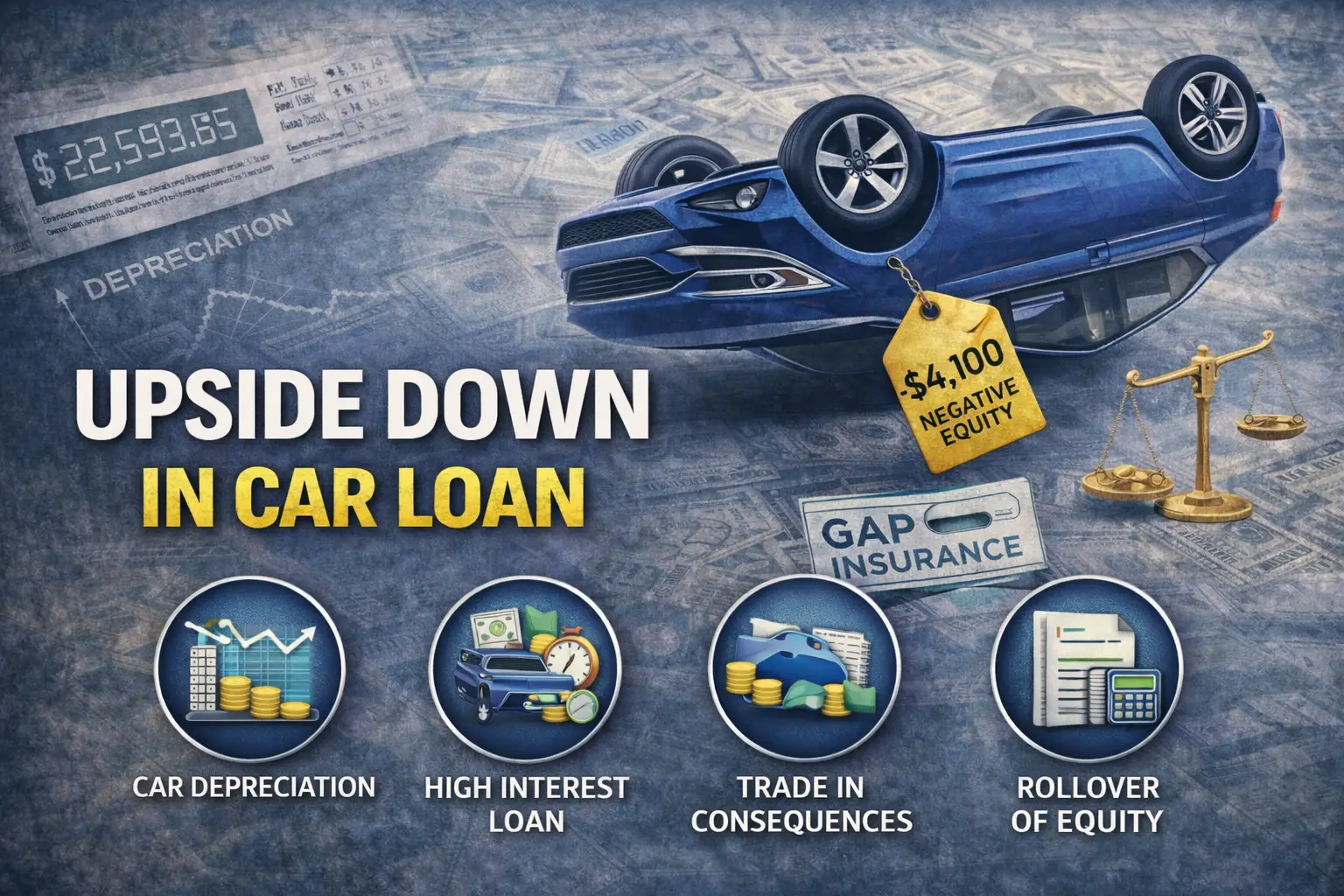
What Does It Mean to Be Upside Down in a Car Loan?
Being upside down in car loan refers to a situation where the remaining loan balance exceeds the current market value of the vehicle. This condition is also known as a negative equity auto loan.
When a borrower owes more than the vehicle is worth, the car loan balance higher than car value creates a financial gap. If the vehicle were sold at fair market value, the sale proceeds would not fully satisfy the outstanding debt.
This condition is commonly measured using the loan-to-value ratio auto loan metric. Loan-to-value (LTV) represents the loan balance divided by the vehicle’s current market value.
For example:
- Vehicle market value: $15,000
- Remaining loan balance: $18,000
- LTV ratio: 120%
An LTV above 100% indicates negative equity. Lenders use this ratio in auto loan underwriting risk assessment to determine collateral risk exposure.
Negative equity does not violate loan terms by itself. However, it creates financial constraints if the borrower wants to sell, trade, or refinance the vehicle.
How Negative Equity Happens
Several financial factors contribute to becoming upside down on a car loan.
Car Depreciation Rate
The primary driver is the car depreciation rate. New vehicles typically lose value rapidly during the first year of ownership. In many cases, a new vehicle may depreciate 15% to 25% within the first 12 months.
Because loan balances decline gradually while depreciation occurs quickly, negative equity often appears early in the loan term.
Long Term Car Loan Risk
A long term car loan risk arises when borrowers choose extended repayment periods, such as 72 or 84 months. Longer terms reduce monthly payments but slow the rate at which principal is repaid.
With extended amortization, the vehicle may depreciate faster than the loan balance declines, increasing the likelihood of negative equity.
High Interest Auto Loan Impact
A high interest auto loan impact also contributes. Higher interest rates allocate more of each early payment toward interest rather than principal reduction. This structure is reflected in the auto loan amortization schedule, where early payments reduce the balance slowly.
Low or No Down Payment Effect
The down payment effect on car loan is significant. When little or no down payment is made, the starting loan balance closely matches or exceeds the vehicle’s value, especially after taxes, fees, and optional add-ons are financed.
Financing the entire purchase price increases the initial LTV ratio, making it easier to fall into negative equity after depreciation.
How to Calculate If You Are Upside Down
Determining whether you are upside down requires comparing two figures: current market value and total payoff amount.
Determine Current Vehicle Value
Vehicle value can be estimated using:
- Market pricing guides
- Comparable private sales
- Dealer trade-in offers
The value used should reflect realistic selling price rather than original purchase price.
Request Lender Payoff Quote
Borrowers must obtain an official lender payoff quote. The payoff quote includes:
- Remaining principal balance
- Accrued interest through a specific date
- Any applicable fees
The payoff amount may differ from the last statement balance due to daily interest accrual.
Compare Payoff to Market Value
If the payoff amount exceeds the vehicle’s market value, the difference represents negative equity.
Example:
- Vehicle value: $12,000
- Payoff quote: $14,500
- Negative equity: $2,500
This confirms the borrower is upside down in the car loan.
Risks of Being Upside Down in a Car Loan
Negative equity creates specific financial risks.
Trade In Car With Negative Equity
When borrowers trade in car with negative equity, the dealer must satisfy the outstanding loan before transferring ownership. If the trade-in value is less than the payoff, the difference must be paid out of pocket or added to a new loan.
Roll Over Negative Equity
To roll over negative equity means adding the unpaid balance from the old loan into a new auto loan. This increases the new loan’s starting balance and often results in a higher loan-to-value ratio auto loan.
Higher Monthly Payments
Rolling negative equity into a new loan increases the financed amount. Even with longer terms, the total repayment cost rises due to interest on the carried-over balance.
Increased Loan-to-Value Ratio
A higher starting LTV ratio increases lender risk exposure. Some lenders cap LTV at specific thresholds during underwriting.
Car Repossession Risk
If payments become unaffordable due to high loan balances, car repossession risk increases. Repossession does not eliminate the debt automatically.
Deficiency Balance After Repossession
If a repossessed vehicle is sold at auction for less than the loan balance, the borrower may owe a deficiency balance after repossession. This remaining debt can be pursued through collection efforts depending on state law.
Gap Insurance Coverage and Total Loss Scenarios
Gap Insurance Coverage Purpose
Gap insurance coverage is designed to cover the difference between the loan balance and the vehicle’s actual cash value in the event of total loss due to accident or theft.
Total Loss Insurance Payout Process
When a vehicle is declared a total loss:
- Primary auto insurance pays the vehicle’s actual cash value.
- If a loan balance remains higher than that amount, gap insurance may pay the difference.
- Coverage typically applies only to qualifying losses.
Coverage Limitations
Gap insurance does not:
- Cover missed payments
- Cover rolled-in negative equity beyond policy limits
- Apply to voluntary sale situations
It only applies in total loss scenarios under policy terms.
How to Get Out of Negative Equity Car Loan
Borrowers seeking how to get out of negative equity car loan have several structured options.
Make Extra Principal Payments
Making additional payments directly toward principal reduces the outstanding balance faster than scheduled payments. An early car loan payoff strategy accelerates equity recovery by shrinking the balance ahead of the amortization schedule.
Designating extra funds specifically for principal is necessary to ensure correct allocation.
Refinance Upside Down Car Loan
To refinance upside down car loan, lenders typically require:
- Acceptable credit score
- Stable income
- LTV within allowable refinance limits
Some lenders restrict refinancing if LTV exceeds specific thresholds. Refinancing may reduce interest rate but does not eliminate negative equity unless additional funds are applied.
Private Sale With Outstanding Loan
A private sale with outstanding loan requires coordination with the lender holding the title lien.
Process typically includes:
- Obtaining payoff quote
- Collecting sale funds
- Paying lender directly
- Managing lien release
If sale price is less than payoff, borrower must pay the difference before lien release.
Rolling Over Negative Equity Into a New Loan
Dealerships may structure transactions that incorporate unpaid balances into new financing agreements.
How It Is Structured
The dealer pays off the existing loan and adds the unpaid difference to the new vehicle’s loan balance.
Impact on New Loan Balance
This increases:
- Starting principal
- Monthly payment
- Total interest paid over time
It also raises the LTV ratio of the new vehicle loan.
Increased Long-Term Cost
Interest accrues on the combined balance, increasing overall borrowing costs across the extended term.
Auto Loan Underwriting Risk Assessment
Lenders evaluate multiple factors during auto loan underwriting risk assessment.
Loan-to-Value Ratio
Higher LTV ratios signal increased collateral risk.
Credit Score
Credit score determines tier placement and pricing.
Income Stability
Documented income supports repayment capacity.
Debt-to-Income Ratio
Debt-to-income ratio reflects ability to manage additional payment obligations.
Lenders assess these factors collectively to determine approval and rate eligibility.
Frequently Asked Questions About Being Upside Down in a Car Loan
Can you refinance if upside down?
Refinancing is possible in some cases, but approval depends on credit profile and lender LTV limits. Extremely high LTV ratios may limit eligibility.
Does gap insurance cover negative equity?
Gap insurance covers the difference between insurance payout and loan balance in total loss scenarios, subject to policy limits. It does not apply to voluntary sale or trade-in.
Is it illegal to sell a car with a loan?
It is not illegal to sell a vehicle with an outstanding loan, but the lien must be satisfied before title transfer. The lender must receive full payoff.
How long does it take to regain positive equity?
Time required depends on depreciation rate, loan term, interest rate, and payment amount. Making additional principal payments accelerates equity recovery.
Being upside down in car loan situations results from the interaction between depreciation, loan structure, and financing terms. Understanding LTV ratios, amortization schedules, and payoff calculations provides clarity regarding financial exposure and structured resolution options.