
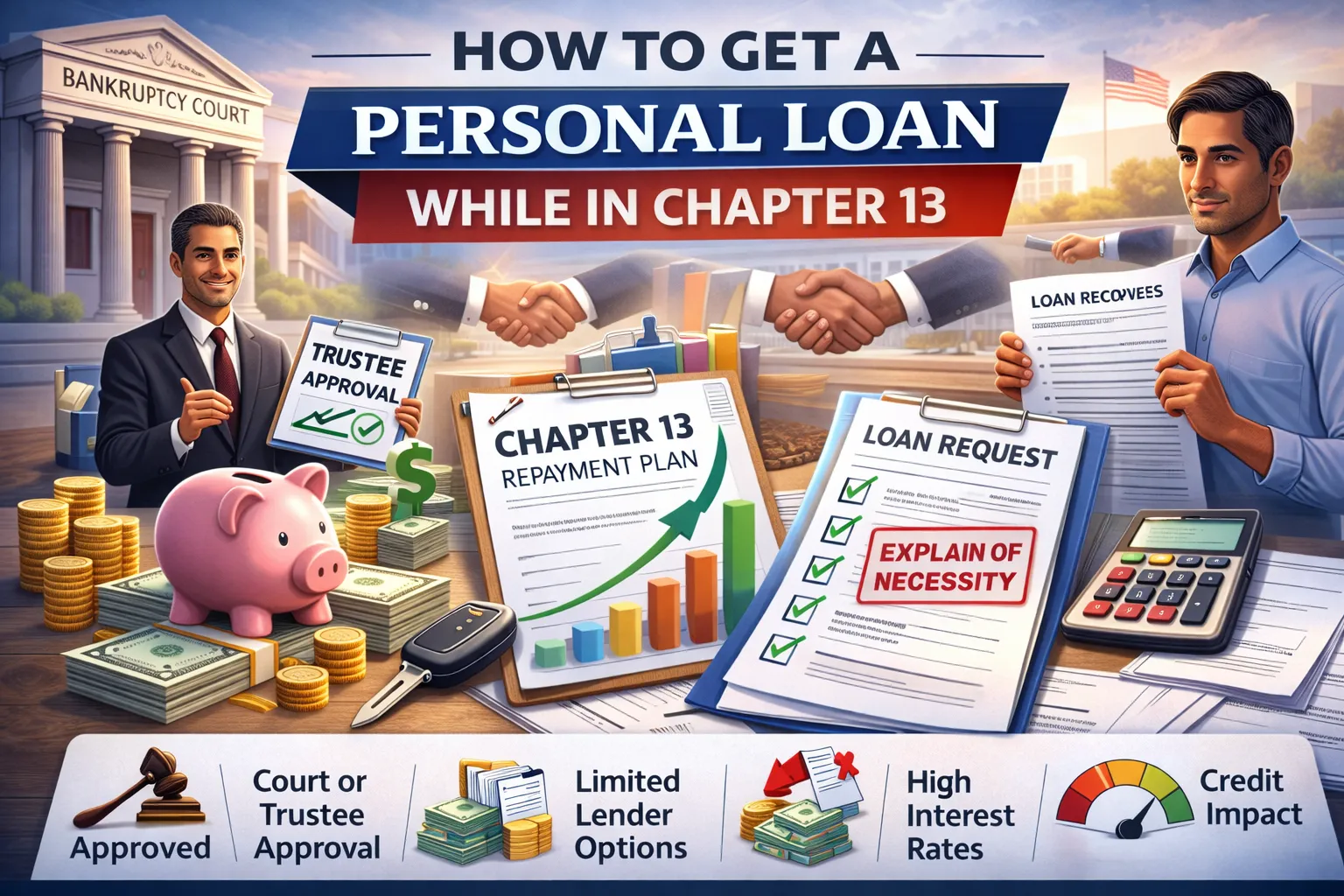
Obtaining a personal loan during Chapter 13 bankruptcy involves specific legal, financial, and procedural constraints. Chapter 13 is a court-supervised repayment plan that restructures debt over a period of three to five years. During this time, borrowers operate under strict financial oversight, which directly affects their ability to take on new credit obligations, including personal loans.
Understanding how lending works under Chapter 13 requires examining court approval requirements, lender risk evaluation, repayment capacity, and the impact on existing obligations. This framework ensures that any new debt does not interfere with the approved repayment plan.
Understanding Chapter 13 Bankruptcy and Credit Restrictions
Chapter 13 bankruptcy is designed to allow individuals to reorganize their debts while maintaining control of their assets. Instead of liquidating property, borrowers commit to a structured repayment plan administered by a trustee.
During this period:
- Borrowers are prohibited from incurring new debt without authorization
- All financial activity is subject to court and trustee oversight
- Monthly disposable income is allocated toward creditor repayment
This structure limits access to traditional lending channels, as lenders face heightened risk and regulatory constraints.
Can You Get a Personal Loan While in Chapter 13
It is possible to obtain a personal loan during Chapter 13, but only under specific conditions. The most critical requirement is obtaining approval from the bankruptcy court or trustee before taking on new debt.
Lenders will not finalize a loan agreement unless:
- The borrower has written permission from the trustee or court
- The new loan does not disrupt the repayment plan
- The borrower demonstrates sufficient income to manage additional payments
Without approval, incurring new debt may violate bankruptcy terms and lead to dismissal of the case.
The Role of Court or Trustee Approval
Court approval functions as a risk control mechanism to ensure that new debt aligns with the borrower’s financial rehabilitation plan.
To request approval, borrowers typically must:
- Submit a formal motion explaining the purpose of the loan
- Provide documentation of income and expenses
- Demonstrate necessity rather than discretionary borrowing
Common acceptable reasons include:
- Emergency medical expenses
- Essential vehicle repairs or replacement
- Necessary household expenditures
The trustee evaluates whether the loan is reasonable and whether repayment can be accommodated without jeopardizing creditor payments.
Lender Considerations and Risk Assessment
From a lending perspective, borrowers in Chapter 13 represent elevated risk. As a result, fewer lenders operate in this segment, and underwriting standards are more restrictive.
Lenders assess:
- Stability of income and employment
- Payment history within the Chapter 13 plan
- Debt-to-income ratio including plan obligations
- Remaining duration of the repayment plan
Interest rates are typically higher due to increased default risk, and loan amounts may be limited.
Types of Personal Loans Available During Chapter 13
Access to personal loans during Chapter 13 is generally limited to specific categories:
Secured Personal Loans
These loans require collateral, such as a vehicle or savings account. Collateral reduces lender risk and may improve approval chances.
Subprime or High-Risk Loans
Some lenders specialize in high-risk borrowers, including those in active bankruptcy. These loans often carry elevated interest rates and stricter repayment terms.
Credit Builder Loans
Structured to help borrowers rebuild credit, these loans are typically small in size and may involve funds being held in escrow until repayment is complete.
Each loan type must still meet court approval requirements before being finalized.
Impact on Your Chapter 13 Repayment Plan
Taking on a personal loan during Chapter 13 directly affects the financial structure of the repayment plan.
Key considerations include:
- Monthly payment adjustments: New loan obligations may reduce disposable income available for creditors
- Plan feasibility: Courts must ensure that the original plan remains viable
- Risk of default: Additional debt increases the likelihood of payment disruption
If the new loan compromises the repayment plan, approval is unlikely.
Interest Rates and Cost Structure
Interest rates for personal loans during Chapter 13 are typically higher than standard market rates. This reflects both borrower risk and limited lender competition.
The cost of borrowing includes:
- Annual percentage rate (APR), incorporating interest and fees
- Origination fees, if applicable
- Potential penalties for late payments
Borrowers should evaluate the total repayment amount rather than focusing solely on monthly payments.
Steps to Obtain a Personal Loan While in Chapter 13
The process involves coordination between the borrower, trustee, and lender.
1. Assess Financial Necessity
Determine whether the loan is essential and cannot be deferred. Courts prioritize necessity over convenience.
2. Review Repayment Capacity
Calculate whether current income can support additional debt without affecting plan payments.
3. Request Trustee Approval
Submit a formal request outlining the loan purpose, amount, and repayment terms.
4. Identify a Lender
Search for lenders experienced in working with borrowers under bankruptcy supervision.
5. Complete Loan Application
Provide documentation including proof of income, bankruptcy details, and court approval.
6. Finalize Loan Agreement
Once approved, funds are disbursed, and repayment begins according to agreed terms.
Credit Reporting and Long-Term Effects
Personal loans obtained during Chapter 13 can influence credit reporting in multiple ways:
- On-time payments may contribute positively to credit history
- Missed payments can further damage credit standing
- Credit utilization and debt levels affect scoring models
Although Chapter 13 remains on credit reports for several years, responsible borrowing behavior during this period can support gradual credit recovery.
Alternatives to Personal Loans During Chapter 13
In many cases, alternatives may provide more sustainable financial solutions:
- Adjusting the repayment plan through court modification
- Seeking assistance programs for medical or emergency expenses
- Using savings or emergency funds where available
These options may reduce the need for additional debt and align more closely with the goals of Chapter 13.
Risks and Limitations
Borrowers should carefully evaluate the risks associated with taking on new debt during Chapter 13:
- Increased financial burden
- Higher interest costs
- Potential plan disruption
- Limited lender options
Failure to manage additional obligations can result in serious consequences, including dismissal of the bankruptcy case.
Practical Considerations for Borrowers
Maintaining financial discipline is critical while in Chapter 13. Borrowers should focus on:
- Consistent plan payments
- Accurate budgeting and expense tracking
- Avoiding unnecessary credit obligations
- Monitoring credit reports for accuracy
These practices help ensure compliance with bankruptcy requirements and improve financial stability over time.
Legal and Financial Oversight
Chapter 13 imposes a structured environment where financial decisions are monitored to protect both borrowers and creditors. Any new loan must fit within this framework, ensuring that the borrower continues progressing toward debt resolution.
The requirement for court approval distinguishes Chapter 13 from standard borrowing scenarios and serves as a safeguard against excessive debt accumulation.
Key Takeaways on Personal Loans During Chapter 13
Obtaining a personal loan while in Chapter 13 is a regulated process requiring court approval, lender cooperation, and demonstrated repayment ability. While access to credit is limited, it is not entirely restricted, provided that the borrowing aligns with the repayment plan and serves a necessary purpose.
Borrowers must evaluate the cost, risks, and long-term implications before proceeding. Proper coordination with the trustee and careful financial planning are essential to maintaining compliance and achieving successful completion of the Chapter 13 repayment plan.