
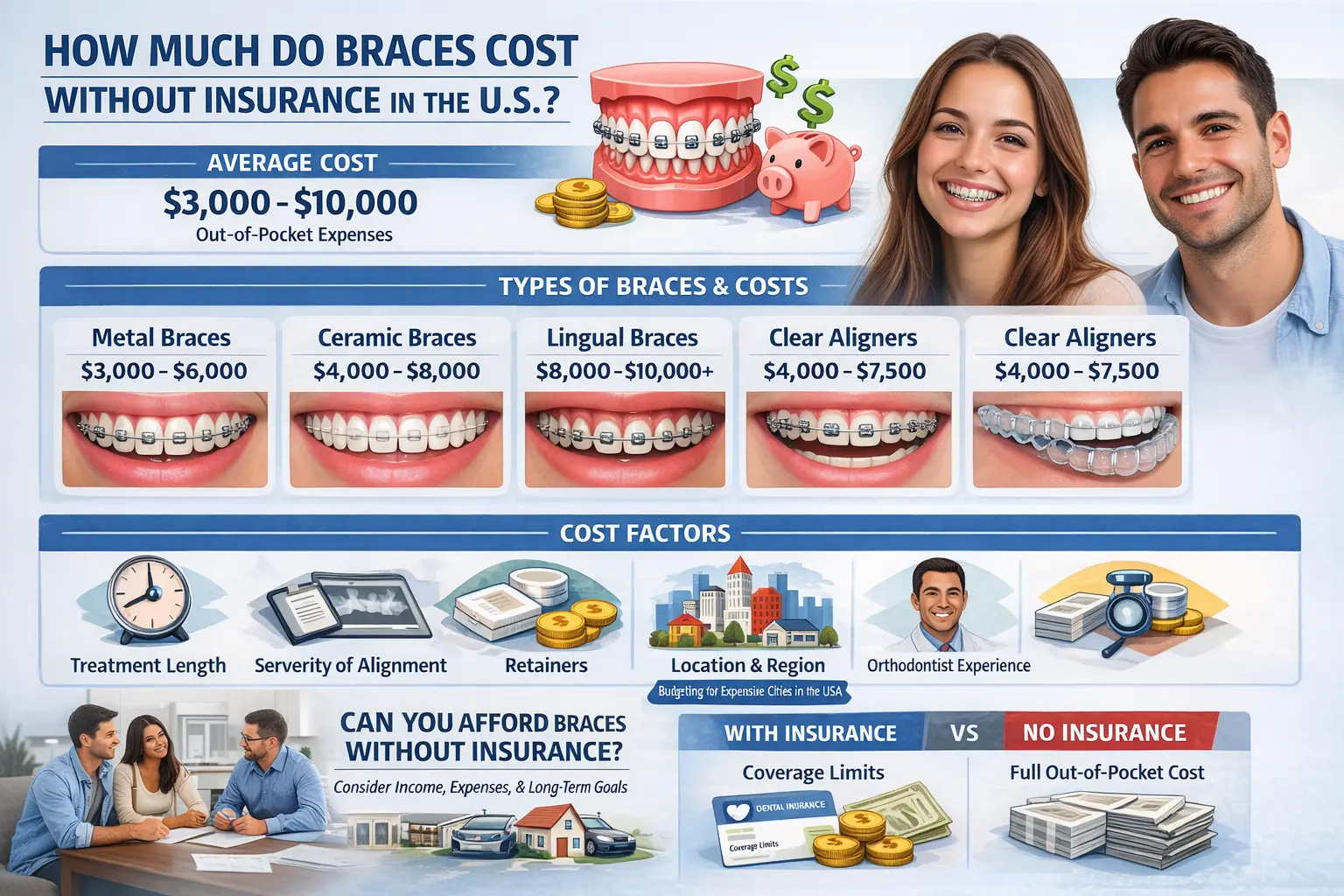
How much do braces cost without insurance is a common question for U.S. patients because orthodontic care is often excluded from dental plans or capped at low lifetime limits. Nationally, the cost of braces without insurance typically ranges from $3,000 to $10,000, depending on treatment type, complexity, duration, and geographic location. These figures reflect full out-of-pocket braces cost paid directly by patients when no dental or orthodontic insurance applies.
Across the United States, most uninsured orthodontic treatment is priced as a comprehensive package covering evaluation, appliance placement, adjustments, and follow-up care. The braces price range varies widely based on materials used, treatment visibility, and required chair time. Understanding the national averages and cost drivers provides clarity for households planning orthodontic treatment without insurance coverage.
National Average Cost of Braces Without Insurance
The national average cost of braces in the US without insurance generally falls between $4,000 and $7,500 for standard orthodontic cases. This range reflects reported pricing across suburban and urban markets and includes most routine treatment components over an 18- to 30-month period.
Lower-cost cases typically involve mild to moderate alignment issues treated with traditional appliances. Higher-cost cases often involve longer treatment durations, more complex bite corrections, or advanced orthodontic systems. Regional pricing differences play a significant role, with metropolitan areas frequently reporting higher orthodontic treatment cost without insurance due to overhead and demand.
These averages represent total treatment fees rather than monthly charges. Patients without insurance are responsible for the entire amount, regardless of payment schedule.
How Much Do Braces Cost Without Insurance by Type
Orthodontic treatment costs vary significantly depending on the type of braces used. Materials, fabrication methods, and adjustment complexity all influence total pricing.
Metal Braces
Metal braces are the most common and least expensive orthodontic option in the United States. Without insurance, metal braces typically cost between $3,000 and $6,000.
They use stainless steel brackets and archwires to guide tooth movement efficiently. Treatment duration usually ranges from 18 to 30 months. Because of their durability and predictable performance, metal braces remain widely used in cost-sensitive cases.
Ceramic Braces
Ceramic braces function similarly to metal braces but use tooth-colored or clear brackets. The cost of braces without dental insurance for ceramic systems usually ranges from $4,000 to $8,000.
Higher pricing reflects material costs and additional maintenance. Ceramic brackets are more prone to staining and breakage, which can increase chair time. Treatment length is comparable to metal braces, but overall orthodontic treatment cost without insurance is higher.
Lingual Braces
Lingual braces are bonded to the inner surfaces of the teeth, making them largely invisible from the front. They are among the most expensive orthodontic options. Without insurance, lingual braces typically cost $8,000 to $10,000 or more.
Pricing reflects custom fabrication, specialized training, and longer adjustment appointments. Treatment planning is complex, contributing to a higher out-of-pocket braces cost.
Clear Aligners
Clear aligner systems use removable trays produced through digital modeling. Without insurance, clear aligners generally cost between $4,000 and $7,500.
The final cost depends on the number of aligners required and the complexity of movement. While office visits may be fewer, the technology and customization place clear aligners within the mid-to-high braces price range.
Detailed Cost Comparison Table
Below is a national overview of typical braces cost without insurance by treatment type. Figures represent total estimated treatment fees.
| Type of Braces | Typical Cost Range (USD) | Visibility | Average Treatment Length |
|---|---|---|---|
| Metal Braces | $3,000 – $6,000 | High | 18–30 months |
| Ceramic Braces | $4,000 – $8,000 | Moderate | 18–30 months |
| Lingual Braces | $8,000 – $10,000+ | Low | 24–36 months |
| Clear Aligners | $4,000 – $7,500 | Low | 12–24 months |
These figures reflect national estimates. Individual treatment plans may fall outside these ranges based on clinical requirements.
What Factors Affect the Cost of Braces Without Insurance
Several variables influence how much braces cost without insurance. These factors explain why pricing can differ substantially between patients.
Treatment duration is a primary cost driver. Longer cases require more adjustments and monitoring. Severity of alignment issues also matters, as complex bite corrections or crowding often increase overall cost.
Geographic location plays a significant role. Orthodontic pricing is higher in large metropolitan areas than in smaller cities or rural regions. Provider experience and specialization also affect fees, as advanced training may be reflected in pricing.
The number of required visits can influence total cost, particularly if repairs or additional adjustments are needed beyond the standard treatment plan.
How Orthodontists Price Braces Without Insurance
When braces are provided without insurance, orthodontists typically establish a comprehensive treatment fee. This fee usually includes diagnostics, appliance placement, routine adjustments, and post-treatment retainers.
Pricing is determined after an initial clinical assessment. The orthodontist evaluates alignment severity, estimated treatment length, and appliance type. Based on these factors, a total orthodontic treatment cost without insurance is calculated.
Rather than charging per visit, most practices bundle services into a single price. This structure provides cost predictability for patients paying entirely out of pocket.
Additional and Hidden Costs Patients Often Overlook
Beyond the base treatment fee, uninsured orthodontic care may involve additional expenses. Initial evaluations and diagnostic imaging can add several hundred dollars if not included in the package price.
Retainers are a common post-treatment requirement. Depending on type and replacement needs, retainers can cost $100 to $500 or more. Lost or damaged retainers may result in additional charges.
Emergency visits, appliance repairs, and replacement of broken brackets or aligners may also increase out-of-pocket braces cost if they fall outside the standard agreement.
Payment Structures When You Pay for Braces Without Insurance
For patients without insurance, orthodontic practices often offer structured payment arrangements. These typically involve an initial deposit followed by monthly installments over the treatment period.
Payment schedules usually align with the estimated duration of treatment. While these arrangements do not reduce the total braces cost without insurance, they spread payments over time.
Some patients use health-related savings accounts to manage payment timing, though the total cost remains unchanged.
Braces Without Insurance vs With Insurance (Cost Comparison)
The primary difference between braces with and without insurance lies in cost sharing. Orthodontic insurance benefits in the U.S. often include lifetime maximums of $1,000 to $2,500.
Even with insurance, patients commonly pay a significant portion out of pocket. For higher-cost treatments, insurance may cover only a fraction of the total fee. As a result, the difference in final cost between insured and uninsured patients may be smaller than expected.
Without insurance, patients are responsible for the full orthodontic treatment cost without insurance from the outset.
Frequently Asked Questions About Braces Cost Without Insurance
How much do braces cost without insurance for adults?
Adult braces without insurance typically cost between $4,000 and $10,000. Adults often require longer treatment times, which can increase total costs compared to pediatric cases. Pricing depends on appliance type, complexity, and geographic location.
Is the cost of braces without dental insurance paid monthly?
Most orthodontists offer monthly payment schedules, but the total cost is calculated upfront. Monthly payments divide the full out-of-pocket braces cost over the treatment period rather than reducing the overall price.
Are clear aligners cheaper than braces without insurance?
Clear aligners are not consistently cheaper. Their cost without insurance often overlaps with traditional braces, typically ranging from $4,000 to $7,500, depending on treatment complexity and duration.
Do braces cost more without insurance in large cities?
Yes. The average cost of braces in the US is generally higher in major metropolitan areas. Higher operating costs and demand contribute to increased orthodontic pricing in urban regions.
Are retainers included in braces cost without insurance?
Sometimes. Some orthodontic packages include one set of retainers, while others bill separately. Replacement retainers are usually an additional expense paid entirely out of pocket.
Why does orthodontic treatment cost without insurance vary so widely?
Costs vary due to differences in treatment complexity, appliance type, provider experience, and regional pricing. These factors combine to create a broad national braces price range.
Key Cost Takeaways
Braces cost without insurance in the United States typically ranges from $3,000 to $10,000, with national averages clustering between $4,000 and $7,500. Metal braces are generally the least expensive, while lingual braces are the most costly.
Pricing depends on treatment type, duration, severity of alignment issues, and geographic location. Additional costs such as diagnostics, retainers, and repairs can increase total out-of-pocket braces cost.
Without insurance, patients are responsible for the full orthodontic treatment cost without insurance, making braces a significant but common out-of-pocket healthcare expense nationwide.