Paying off a vehicle loan ahead of schedule is a common financial topic for U.S. consumers managing monthly debt obligations. The concept of paying off a car loan early is often associated with interest savings, improved cash flow, and reduced long-term financial commitments. Understanding how auto loans function, how interest is calculated, and what considerations apply before accelerating payments is essential for evaluating an early car loan payoff strategy in a neutral, informed way.
This article explains the best ways to pay off a car loan early from an educational perspective. It focuses on mechanics, impacts, and financial considerations rather than recommendations, approvals, or specific financial products.
How Car Loans Work Before Early Payoff
A car loan is a type of installment loan. It is structured around fixed monthly payments over a defined term, commonly ranging from several years. Each payment includes both principal and interest components.
Principal vs. Interest
The principal is the original amount borrowed to purchase the vehicle, excluding interest and fees. Interest is the cost of borrowing that principal. Each monthly payment is split between reducing the principal balance and covering interest charges.
In the early stages of most auto loans, a larger portion of each payment is applied to interest rather than principal. Over time, this allocation shifts, with more of each payment reducing the remaining loan balance.
Loan Terms and Amortization
Auto loans typically follow an amortization schedule. Amortization spreads repayment over time, ensuring the loan balance reaches zero by the end of the term if all scheduled payments are made. Because interest is calculated based on the outstanding balance, payments made earlier in the loan term generally have a larger impact on total interest paid.
This structure explains why discussions about early car loan payoff often focus on the timing of payments rather than only the amount.
Why Interest Is Higher in the Early Years
Interest accrues on the remaining principal balance. At the start of a loan, the balance is highest, which leads to higher interest charges. As the balance decreases, interest costs decline. This dynamic is central to understanding how extra car loan payments may affect overall loan cost.
Is Paying Off a Car Loan Early a Good Idea?
The question of whether paying off a car loan early is beneficial depends on multiple factors. From an informational standpoint, early payoff changes how interest accumulates, affects monthly cash flow, and interacts with other financial priorities.
Interest Savings Concept
Paying off a car loan early can reduce the total interest paid over the life of the loan. This reduction occurs because interest is calculated on a smaller outstanding balance for a shorter period. The extent of interest savings depends on the loan’s original term, balance, and payment timing.
Cash Flow Impact
Completing an early car loan payoff eliminates a recurring monthly obligation. This can change household cash flow dynamics, particularly when balancing other fixed expenses such as housing costs. Long-term commitments like mortgages illustrate how loan duration affects total cost, as seen in broader discussions of extended repayment structures such as a 30-year home loan explained in this overview of long-term mortgage payments.
Credit Profile Considerations
Auto loans are installment accounts that appear on credit reports. Paying off a car loan early closes the account. While closed accounts remain on credit history for a period of time, the active loan payment history no longer contributes to ongoing credit activity. The overall effect varies based on the full credit profile rather than a single loan.
What to Review Before Paying Off a Car Loan Early
Before initiating an early car loan payoff, several loan-specific and personal finance elements warrant review.
Prepayment Penalties
Some auto loans include prepayment penalties. These fees are designed to compensate lenders for interest income lost when a loan is paid off ahead of schedule. Prepayment penalties are not universal, but their presence can change the cost-benefit calculation of paying off a car loan early.
Loan agreements typically specify whether such penalties apply, how they are calculated, and when they are triggered.
Outstanding Loan Balance
The remaining balance reflects how much principal is still owed. Because amortization front-loads interest, loans that are early in their term usually have higher balances relative to the original amount borrowed. Understanding this balance helps clarify how additional payments affect interest and principal.
Budget and Liquidity Considerations
Accelerating loan repayment involves directing funds toward debt rather than other uses. Liquidity refers to the availability of cash for ongoing expenses or unexpected needs. Household budgeting fundamentals, including variable expenses and cost-of-living differences, play a role in determining how additional payments fit into broader financial planning. Budget structure and expense prioritization are examined in resources such as this discussion of budgeting in high-cost U.S. cities.
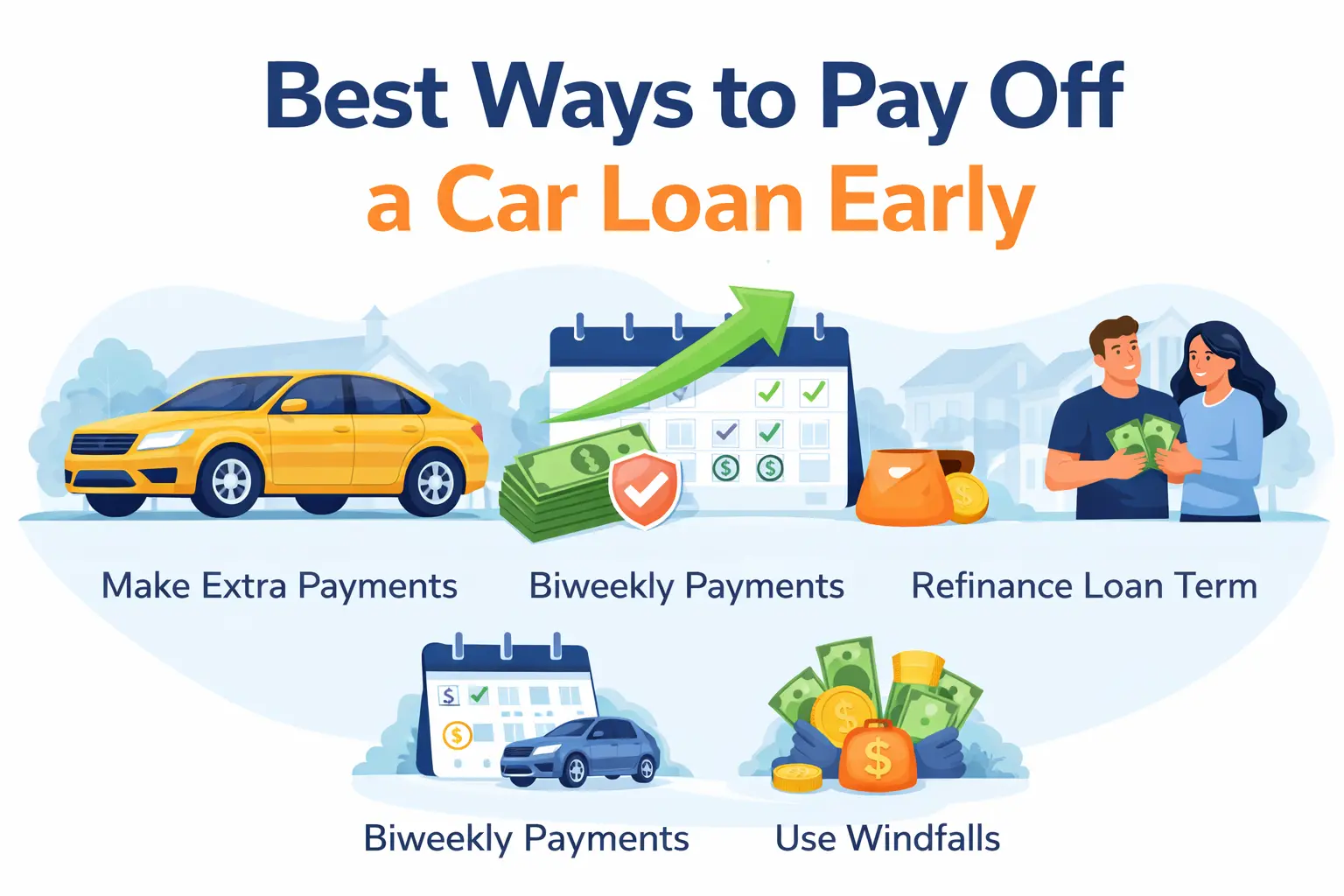
Best Ways to Pay Off a Car Loan Early
Several commonly discussed methods exist for paying off a car loan early. Each method focuses on altering payment timing, frequency, or allocation rather than changing the original loan terms.
Make Extra Principal Payments
Extra principal payments involve paying more than the required monthly amount and directing the additional funds specifically toward the loan principal. When applied correctly, this reduces the outstanding balance faster, which lowers the amount of interest that accrues in future periods.
For this method to be effective, the payment must be applied to principal rather than treated as a future scheduled payment. Loan servicers often provide mechanisms to designate extra amounts for principal reduction.
Increase Monthly Payments Gradually
Another approach involves incrementally increasing monthly payments over time. Even modest increases can shorten the loan term and reduce total interest. This method spreads the impact over many months, rather than relying on a single large payment.
Gradual increases are often discussed in relation to income changes, cost-of-living adjustments, or reduced expenses in other areas.
Biweekly Payment Method
Biweekly payments divide the standard monthly payment into two smaller payments made every two weeks. Because there are 52 weeks in a year, this approach results in the equivalent of one additional full monthly payment annually.
The effectiveness of biweekly payments depends on how the loan servicer applies them. If each payment is credited upon receipt rather than held until the full monthly amount is received, the principal balance may decline faster.
Apply Windfalls Toward the Loan
Windfalls refer to irregular or one-time funds, such as tax refunds, bonuses, or reimbursements. Applying these amounts toward an outstanding loan balance can accelerate payoff without altering regular monthly expenses.
This approach focuses on timing rather than consistency, and its impact varies based on the size and frequency of such funds.
Refinance to a Shorter Loan Term
Refinancing replaces an existing loan with a new one that has a shorter repayment period. Shorter terms generally involve higher monthly payments but reduce the total time interest accrues.
Refinancing changes the structure of the obligation rather than modifying payment behavior. It may involve new loan agreements, closing requirements, and updated amortization schedules.
How Paying Off a Car Loan Early Reduces Interest Costs
Interest on auto loans is calculated based on the remaining principal balance. The earlier that balance decreases, the less interest accumulates over time.
Why Early Payments Matter More
Payments made earlier in the loan term affect a higher principal balance. As a result, reducing the balance early can lead to a greater long-term interest reduction compared to the same payment made later in the term.
Long-Term Interest Reduction Concept
Interest savings are cumulative. Each reduction in principal lowers future interest calculations, creating a compounding effect over the remaining life of the loan. This concept underlies many discussions about how to pay off a car loan faster.
What Happens After a Car Loan Is Paid Off
Completing a car loan payoff triggers several administrative and financial changes.
Lien Removal
Most auto loans include a lien, which gives the lender a legal claim to the vehicle until the debt is satisfied. After payoff, the lien is released. This process may involve documentation from the lender and submission to the appropriate state agency.
Title Release
Once the lien is removed, the vehicle title is released to the owner. Title handling varies by state, with some issuing electronic titles and others providing physical documents.
Insurance Considerations
Loan agreements often require specific insurance coverage levels while the loan is active. After payoff, coverage requirements may change. Understanding how insurance functions as financial protection is part of broader risk management, similar to discussions around personal liability coverage explained in resources such as this overview of personal injury coverage in renters insurance.
Common Mistakes With Early Car Loan Payoff
Several issues frequently arise when attempting to accelerate loan repayment.
Ignoring Prepayment Penalties
Overlooking penalties can offset expected interest savings. Reviewing loan terms helps clarify whether early payoff results in additional costs.
Not Specifying Principal Payments
Extra payments that are not clearly designated for principal may be applied to future installments instead. This limits their impact on interest reduction.
Overusing Savings
Directing excessive funds toward loan payoff can reduce available reserves. This may create challenges when facing unexpected expenses such as medical bills or emergency repairs. Costs associated with healthcare needs, including orthodontic treatment discussed in this breakdown of uninsured braces costs, illustrate why liquidity remains relevant even when focusing on debt reduction.
Paying Off a Car Loan Early vs Other Financial Obligations
Auto loans represent one component of household financial responsibilities. Early car loan payoff interacts with other obligations in different ways.
Housing expenses typically represent the largest fixed cost for most households and often involve long-term financing. Insurance premiums, including auto, health, and property coverage, provide risk protection but require ongoing payments. Medical expenses can be unpredictable and may not align with planned budgets.
Evaluating how paying off a car loan early fits within this broader context requires understanding trade-offs rather than prioritizing one obligation in isolation.
Key Takeaways
Paying off a car loan early involves altering payment timing, frequency, or structure to reduce the outstanding balance faster than scheduled. The best ways to pay off a car loan early commonly include extra principal payments, gradual payment increases, biweekly schedules, applying windfalls, and refinancing to shorter terms.
The impact of early car loan payoff depends on interest calculations, loan terms, prepayment penalties, and personal financial liquidity. Interest savings are influenced by when payments are made, with earlier reductions in principal generally leading to lower total interest costs.
Understanding how auto loans work, reviewing loan agreements, and considering broader financial obligations provides a factual framework for evaluating early payoff methods without assumptions, guarantees, or promotional claims.
2 Replies to “Best Ways to Pay Off a Car Loan Early”