
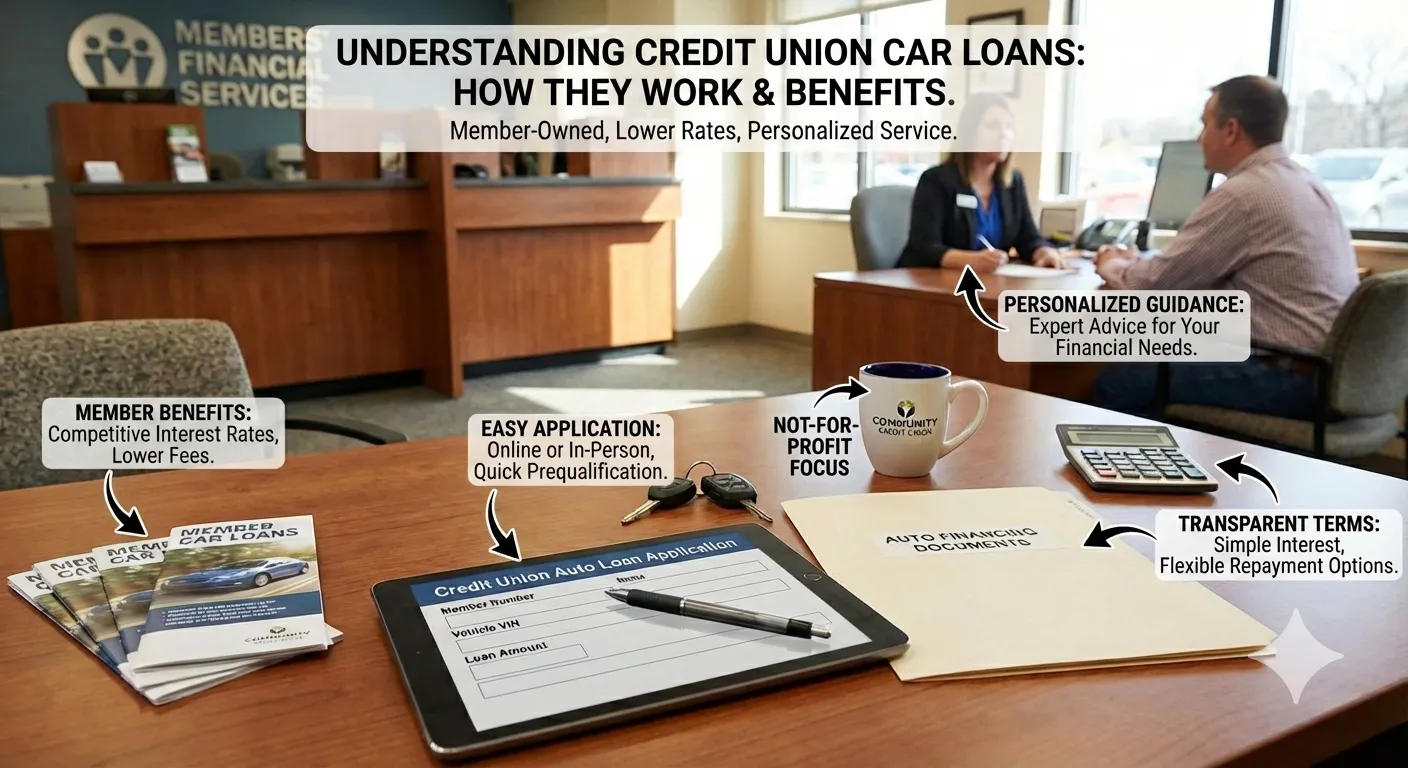
Credit unions provide an alternative to traditional banks for auto financing. They operate as not-for-profit financial cooperatives, owned by members, and typically offer competitive rates and personalized service for car loans. Understanding how credit unions structure their auto loans and how they differ from other lenders is essential for borrowers seeking cost-effective financing. This article explains the process, features, and advantages of credit union auto loans, providing a detailed guide for prospective borrowers.
Membership and Eligibility
Credit unions require membership, which can be based on geographic location, employer, or affiliation with an organization. Eligibility criteria vary by institution, but generally include:
- Residency in a specified geographic area
- Employment at a partner company or industry
- Membership in an affiliated organization or association
Once membership is established, borrowers gain access to auto loans and other financial products. Membership often comes with lower fees, preferential interest rates, and exclusive promotions. Credit unions are member-owned, so profits are returned to members in the form of better rates and lower costs rather than dividends to shareholders. This cooperative model is central to how credit unions operate and maintain competitive offerings.
Interest Rates and Loan Terms
Interest rates at credit unions are usually lower because of the not-for-profit structure. Rates are influenced by multiple factors, including:
- Creditworthiness: Credit scores and payment history are the most important factors determining the interest rate offered. Borrowers with strong credit profiles may qualify for the lowest rates available.
- Loan-to-value ratio (LTV): A larger down payment reduces the LTV ratio, decreasing lender risk and potentially lowering the interest rate.
- Vehicle type and age: Newer or low-mileage vehicles typically qualify for more favorable rates. Older vehicles may carry higher rates because of higher depreciation and risk.
- Loan term: Shorter-term loans generally come with lower interest rates. While longer terms reduce monthly payments, they increase the total interest cost over the life of the loan.
- Income stability: Lenders prefer borrowers with verifiable and consistent income, as this demonstrates the ability to repay the loan.
Credit unions provide transparent rate structures, meaning borrowers can understand the total cost of financing, including the annual percentage rate (APR) and any associated fees.
The Application Process
Applying for a car loan at a credit union is similar to other lenders, but often involves more personalized service. The steps typically include:
- Prequalification: A soft credit check is conducted to estimate potential rates without affecting the borrower’s credit score. Prequalification helps borrowers determine the amount they can afford before vehicle shopping.
- Loan submission: Borrowers provide documentation, including proof of income, vehicle details, identification, and membership verification.
- Underwriting and approval: Credit union staff assess risk, evaluating credit history, income stability, and membership eligibility. Because credit unions focus on member service, underwriting may be more flexible than at traditional banks.
- Loan funding: Once approved, funds are either provided directly to the dealership or used for a private party purchase. Funding timelines are often faster than traditional banks, and credit union staff typically offer guidance throughout the process.
Borrowers can often complete prequalification and initial loan applications online, which accelerates the approval process and provides clarity on rate expectations.
Loan Features and Flexibility
Credit unions often provide flexible loan features designed to accommodate member needs. These include:
- Fixed and variable interest rates: Members can select the type of interest that best fits their financial strategy and risk tolerance.
- Early repayment options: Most credit unions allow extra payments without penalties, enabling borrowers to reduce interest costs by paying down principal faster.
- Refinancing opportunities: Existing auto loans can be refinanced through the credit union to take advantage of lower rates or more favorable terms.
- Optional add-ons: Credit unions may offer additional services, such as GAP insurance, extended warranties, or maintenance plans, often at lower costs compared to dealerships or commercial lenders.
Flexibility is a key advantage of credit union auto loans. Borrowers can tailor repayment schedules, manage prepayments, and incorporate additional protections that reduce long-term financial risk.
Comparing Credit Union Loans to Other Lenders
Credit union auto loans differ significantly from bank or dealership financing: Feature Credit Union Bank/Dealer Interest Rates Typically lower Higher or variable Fees Minimal and transparent May include hidden fees Approval Process Personalized, member-focused Standardized, risk-tiered Loan Flexibility Early payoff and refinancing allowed May have penalties and stricter terms Membership Requirement Required Open to all customers
These distinctions demonstrate that borrowers can often achieve lower total costs and improved service quality by choosing a credit union over other lenders. Personalized service allows for better financial guidance, which is especially useful for first-time car buyers or borrowers with unique financial situations.
Prequalification and Loan Planning
Prequalification is an essential step in the credit union loan process:
- Estimate borrowing power: Prequalification provides a clear estimate of the loan amount a borrower can afford, including projected monthly payments.
- Credit check impact: Soft inquiries for prequalification do not affect credit scores, making it a low-risk way to explore financing options.
- Negotiation leverage: Having prequalification terms allows borrowers to negotiate effectively with dealerships, as they know the maximum rate and loan amount the credit union will approve.
Prequalification also helps borrowers develop a realistic budget, factoring in monthly payments, insurance, taxes, and other vehicle-related expenses.
Down Payment Considerations
A larger down payment offers multiple benefits for borrowers:
- Lower loan-to-value ratio: Reduces the lender’s risk and can lead to lower interest rates.
- Immediate equity in the vehicle: Helps protect against depreciation and negative equity if the vehicle loses value faster than expected.
- Improved approval odds: Higher down payments may make borrowers with limited credit history more attractive to lenders.
Typical recommended down payments range from 10–25 percent of the vehicle purchase price. For credit unions, larger down payments can translate into more favorable interest rates and loan terms.
Vehicle Selection and Rate Implications
The type and condition of the vehicle affect the interest rate offered:
- New vs. used: New cars generally qualify for the lowest rates due to higher residual value and slower depreciation.
- Age and mileage: Older or high-mileage vehicles carry greater risk and often higher interest rates.
- Resale value: Vehicles that retain value reduce lender risk and may allow borrowers to secure better financing terms.
Credit unions may impose maximum age or mileage limits for vehicles to be eligible for certain loan programs. Choosing a vehicle with strong market value and low depreciation can reduce borrowing costs.
Refinancing and Interest Savings
Credit union members can refinance existing auto loans to obtain lower rates or improved loan terms:
- Eligibility: Borrowers who have improved credit, a stable payment history, and sufficient vehicle equity are likely candidates.
- Benefits: Refinancing can reduce monthly payments, total interest cost, or loan term.
- Considerations: Evaluate any fees, prepayment penalties, or changes in loan structure before refinancing.
Refinancing is particularly advantageous when market interest rates decline, or the borrower’s financial profile improves after the original loan was issued.
Insurance Requirements
Credit unions require borrowers to maintain adequate insurance coverage on financed vehicles:
- Full coverage: Collision and comprehensive insurance are typically required, in addition to state minimum liability coverage.
- Lienholder protection: The credit union must be listed as the lienholder or loss payee.
- Force-placed insurance: Lapses in coverage may result in the lender adding insurance at a higher cost to protect its collateral.
Maintaining continuous insurance ensures compliance with loan agreements and protects both the borrower and the credit union.
Co-Signer and Joint Applications
Borrowers with limited credit history or lower income may benefit from a co-signer:
- Shared liability: Co-signer is responsible for repayment if the primary borrower defaults.
- Improved loan terms: Credit unions may offer better interest rates or higher approval odds with a co-signer.
- Credit reporting: The loan appears on both borrower and co-signer credit reports, influencing future borrowing ability.
Using a co-signer can help first-time borrowers or those with limited credit history access more favorable financing options.
Loan Payment Structure
Credit union auto loans are typically structured as installment contracts:
- Simple interest accrual: Interest is calculated on the remaining principal balance, allowing payments to gradually reduce interest costs over time.
- Amortization schedule: Each payment covers accrued interest first, then reduces principal. Early or extra payments can reduce the total interest paid.
- Payment frequency: Monthly payments are standard, though some credit unions allow biweekly or semi-monthly payments for faster payoff.
Understanding the payment structure is essential for budgeting and assessing the overall cost of the loan.
Fees and Ancillary Costs
Credit union auto loans often have fewer fees than commercial banks, but borrowers should be aware of potential costs:
- Origination fees: Some credit unions may charge a small processing fee.
- Late payment fees: Fees apply if payments are missed or delayed.
- Optional add-ons: Products such as GAP insurance or extended warranties may be included in the loan, affecting the total financed amount.
Transparent disclosure of fees is a hallmark of credit union lending, allowing members to evaluate total borrowing costs.
Preparing to Apply for a Credit Union Auto Loan
Before applying, borrowers should:
- Review and improve credit profiles where possible
- Determine an affordable monthly payment based on income and expenses
- Research vehicles that meet lender eligibility requirements
- Consider potential down payment amounts to reduce LTV ratio
- Compare offers from multiple credit unions to identify the best terms
Preparation ensures a smoother application process, faster approval, and more favorable loan terms.