
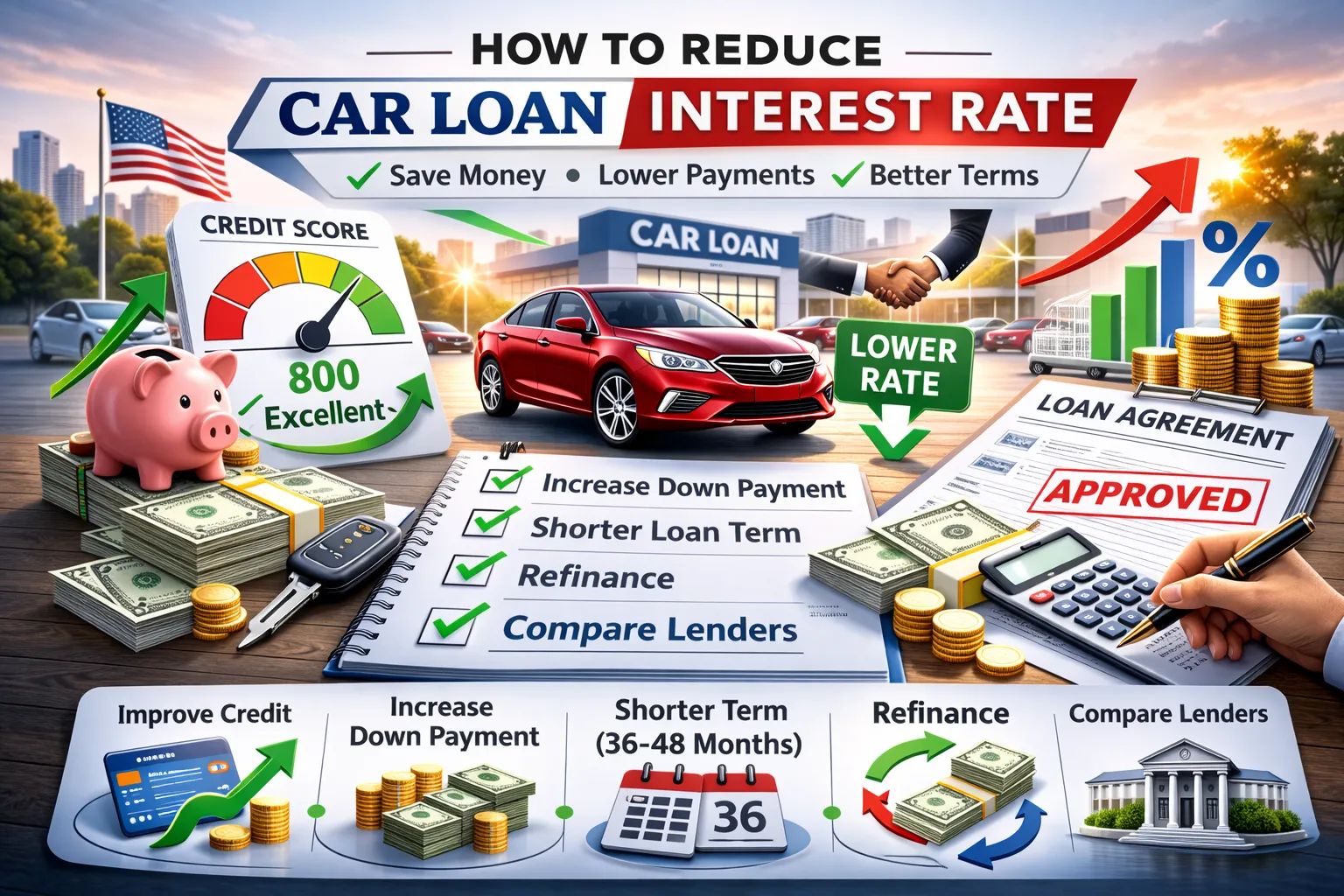
Reducing the interest rate on a car loan is one of the most effective ways to decrease the total cost of vehicle ownership. Interest constitutes a significant portion of a loan’s total repayment, especially over longer terms. Understanding how rates are determined and the levers available to borrowers can lead to measurable savings. This article provides a professional, in-depth, and structured explanation of strategies to lower car loan interest rates, including practical steps, risk factors, and financial considerations.
Understanding How Car Loan Interest Rates Are Set
Interest rates on car loans are influenced by multiple variables that assess borrower risk and vehicle characteristics. Lenders use these factors to calculate the annual percentage rate (APR), which includes both the nominal interest rate and certain finance charges expressed as a yearly cost.
Key determinants include:
- Credit score and credit history: Higher FICO or Vantage scores typically result in lower interest rates.
- Debt-to-income ratio (DTI): A lower ratio indicates stronger repayment capacity.
- Loan-to-value ratio (LTV): Larger down payments reduce LTV and lender risk.
- Loan term length: Shorter terms usually carry lower rates.
- Vehicle type and age: New vehicles often qualify for lower rates than older or high-mileage models.
- Income stability: Consistent and verifiable income reassures lenders of repayment ability.
Lenders categorize borrowers into tiers based on risk profiles, and each tier is associated with a range of interest rates. Improving factors that influence your tier can lead to a lower APR.
Improve Your Credit Profile
Your credit profile is one of the strongest levers for securing a lower interest rate. Lenders rely heavily on credit scores and reports to evaluate risk.
Steps to Enhance Creditworthiness:
- On-time payments: Ensure all existing loans, credit cards, and other debts are current. Payment history is the largest factor affecting credit scores.
- Lower credit utilization: Maintain revolving credit balances below 30 percent of total available credit. This shows responsible credit management.
- Dispute inaccuracies: Review credit reports for errors and dispute incorrect late payments, collections, or accounts that negatively affect your score.
- Length of credit history: Longer credit histories improve your score; avoid opening multiple new accounts immediately before applying.
- Diversified credit mix: Having a mix of installment loans and revolving credit can demonstrate financial management capabilities.
By proactively improving your credit profile, borrowers can qualify for better rates and may gain access to special financing programs.
Increase Your Down Payment
A larger down payment reduces the amount financed and the loan-to-value ratio, decreasing lender exposure.
- Lower LTV ratio: A smaller loan relative to vehicle value reduces default risk.
- Immediate equity: Provides a buffer against depreciation and negative equity.
- Potential rate reduction: Lenders may offer lower rates for borrowers with significant upfront equity.
Recommended down payment ranges typically fall between 10–25 percent of the vehicle purchase price, though higher down payments may provide additional interest rate savings.
Shorten Loan Term
Loan term length affects interest rate and overall cost:
- Shorter terms (36–48 months): Usually come with lower interest rates and reduce total interest paid.
- Longer terms (60–84 months): Lower monthly payments but higher total interest due to prolonged accrual.
While shorter terms increase monthly payments, they reduce total financing costs and often qualify borrowers for lower-tier interest rates.
Choose the Right Vehicle
Vehicle characteristics can impact lender risk and interest rates:
- New vs. used: New vehicles typically carry lower rates due to higher collateral value and slower depreciation.
- Vehicle age and mileage: Older or high-mileage vehicles may incur higher rates.
- Resale value: Vehicles that retain value reduce lender risk and can help borrowers secure better rates.
Financing vehicles with higher residual value and fewer miles minimizes depreciation risk and interest premiums.
Compare Lenders and Loan Offers
Not all lenders price auto loans the same. Comparing multiple institutions allows borrowers to identify competitive rates.
Lender types to consider:
- Banks and credit unions
- Captive financing arms of manufacturers
- Online lenders and auto finance companies
- Dealership-arranged third-party loans
Steps to compare effectively:
- Request pre-approval to obtain a firm rate estimate.
- Review APR rather than nominal rate alone.
- Compare total finance charges and monthly payments.
- Consider lender fees and required insurance conditions.
Pre-approval provides leverage for negotiating rates at the dealership or selecting the most favorable financing offer.
Refinance Existing Auto Loans
Refinancing replaces your current loan with a new one, often at a lower interest rate:
- Ideal candidates: Borrowers who have improved credit scores, consistent payment histories, or when market interest rates decline.
- Impact: Refinancing can lower the monthly payment, reduce total interest paid, or shorten loan term.
- Cost considerations: Account for any fees, including title transfer, application fees, or early payoff penalties.
Example: Refinancing a 20,000-dollar loan at 8% for 60 months to a new 6% rate can reduce total interest expense by hundreds or thousands of dollars, depending on the balance and term.
Add a Co-Signer
A co-signer with strong credit can enhance loan terms:
- Joint responsibility: Co-signer is legally liable for repayment if the primary borrower defaults.
- Improved approval odds: Lenders view co-signed loans as lower risk.
- Lower interest rates: Combined financial strength may allow the borrower to access better-tier pricing.
It’s crucial for both parties to understand obligations, as missed payments can negatively affect both credit profiles.
Reduce Debt-to-Income Ratio
Debt-to-income ratio (DTI) measures monthly debt obligations relative to gross income:
- Formula: Total monthly debt ÷ gross monthly income.
- Optimal ratio: Lenders typically prefer DTI below 36–45%.
- Impact: Lower DTI indicates greater repayment capacity, potentially qualifying for lower interest rates.
Reducing outstanding balances before applying for a loan can improve DTI and increase rate eligibility.
Make Additional Principal Payments
Extra payments directly toward principal reduce the outstanding balance:
- Reduces future interest: Interest is calculated on remaining principal, so early reduction decreases total finance charges.
- Shortens loan term: Paying down principal accelerates loan payoff.
- Check application rules: Ensure additional payments apply to principal, not prepaying future installments.
Avoid Extended Terms
Extended loan terms increase interest accrual:
- Longer term consequences: Lower monthly payments but higher total interest paid over time.
- Strategic consideration: Balance affordability with total financing cost to achieve the lowest overall interest expense.
Evaluating total repayment versus monthly payment ensures informed decision-making.
Maintain Continuous Insurance Coverage
Lenders require full coverage insurance, including collision and comprehensive coverage:
- Lienholder protection: Lender must be listed as loss payee.
- Prevent force-placed insurance: Lapses may trigger higher cost insurance added to the loan balance.
- Consistent coverage: Supports uninterrupted loan servicing and avoids penalties.
Timing and Market Conditions
Interest rates are influenced by macroeconomic factors and market trends:
- Benchmark rates: Federal Reserve policies affect the cost of funds for lenders.
- Loan market competition: High competition may lower offered rates.
- Seasonal promotions: Some dealerships or captive lenders may offer temporary rate reductions.
Monitoring conditions may provide opportunities to secure lower rates or refinance effectively.
Negotiating Dealer Financing
Dealership financing may include lender markups:
- Request buy rate: Transparency allows negotiation of the true lender rate.
- Understand dealer incentives: Some promotions may temporarily reduce interest rates, but evaluating long-term cost is essential.
- Negotiate effectively: Compare dealer financing against bank or credit union offers to ensure competitive pricing.
Key Metrics to Review
Before committing to a car loan, analyze:
- Annual percentage rate (APR): Includes all interest and finance charges.
- Monthly payment: Affordable within budget constraints.
- Total interest cost: Evaluate over the full term.
- Loan-to-value ratio: Lower ratios generally reduce interest rates.
- Prepayment flexibility: Ability to make extra principal payments without penalty.
Summary of Strategies to Lower Interest Rate
- Improve credit score and payment history
- Maintain low debt-to-income ratio
- Increase down payment
- Choose shorter loan term
- Select vehicles with high residual value
- Compare multiple lenders and offers
- Consider refinancing after improving credit
- Use a co-signer with strong financial profile
- Make additional principal payments
- Maintain continuous insurance coverage
- Monitor market and interest rate trends
- Negotiate dealer financing effectively
Implementing a combination of these strategies can substantially reduce the interest rate, lower monthly payments, and decrease the total cost of vehicle ownership. Strategic planning and understanding lender requirements are essential for borrowers seeking optimal financing outcomes.